
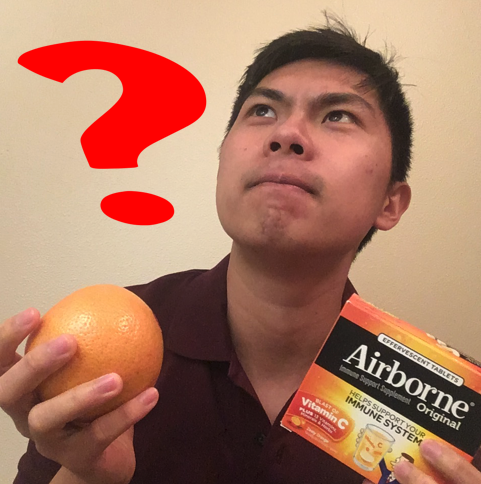
As healthy eating becomes ever more popular, so are all kinds of nutritional and dietary supplements. Many claims are made. Huge amounts of dollars are spent by consumers for these over the counter products. However, as supplements are not as tightly regulated as medicine, consumers are often not very well informed. Scientific studies on nutritions and supplements often yield conflicting results, leaving people even more baffled.
Recently, an article published on Annal of Internal Medicine in 2019 has shed some light on the general use of nutrition/supplement and outcome (Ann Intern Med. 2019;170:604-613). In this article entitled “Association among dietary supplement use, nutrition intake, and mortality among US adults”, Chen, et al. conducted a cohort study of 30,899 US adults funded by NIH.
During a median follow-up of 6.1 years, Individuals with a history of ever-use of dietary supplements was NOT associated with mortality benefits. Adequate intake (at or above the Estimated Average Requirement or the Adequate Intake level) of vitamin A, vitamin K, magnesium, zinc, and copper was associated with reduced all-cause or cardiovascular mortality, but the associations were restricted to nutrient intake from foods. Interestingly, excess intake of calcium was associated with increased risk for cancer death, and the association seemed to be related to calcium intake from supplements as well (≥1000 mg/d vs. no use: multivariable-adjusted rate ratio, 1.53 [CI, 1.04 to 2.25], not from food source.
What does this study tell us? First of all, let’s be clear that this is not a randomized, placebo-controlled, prospective study. Rather, it was an observational study, which can be confounded by a number of potential biases. That being said, the findings are intriguing, a potential important finding here is that nutrition from food, rather than supplements, are more likely to be beneficial.
Supplements are often extracted/synthesized components of certain nutrients. They are often given in a large or very large quantity to “supplement” our body’s needs. These seemingly harmless elements may affect our body in many ways that may not always be beneficial. In Chinese Medicine, we often talk about Yin and Yang, which essentially describe the necessary inner balance of our body. It is well known that even for something that is very beneficial to the body, such as Ginseng, too much of it can cause harm. The same can be true for supplements.
If you are reading this blog, you most likely care about your health, you may prefer natural rather than artificial/processed food. Supplements in one way can be considered as “processed nutrients”. This study adds more evidence that nutrition from food may have an advantage!